"The Whole Why World": Introduction and Argument
Blog post #1, Argument
Hello Readers!
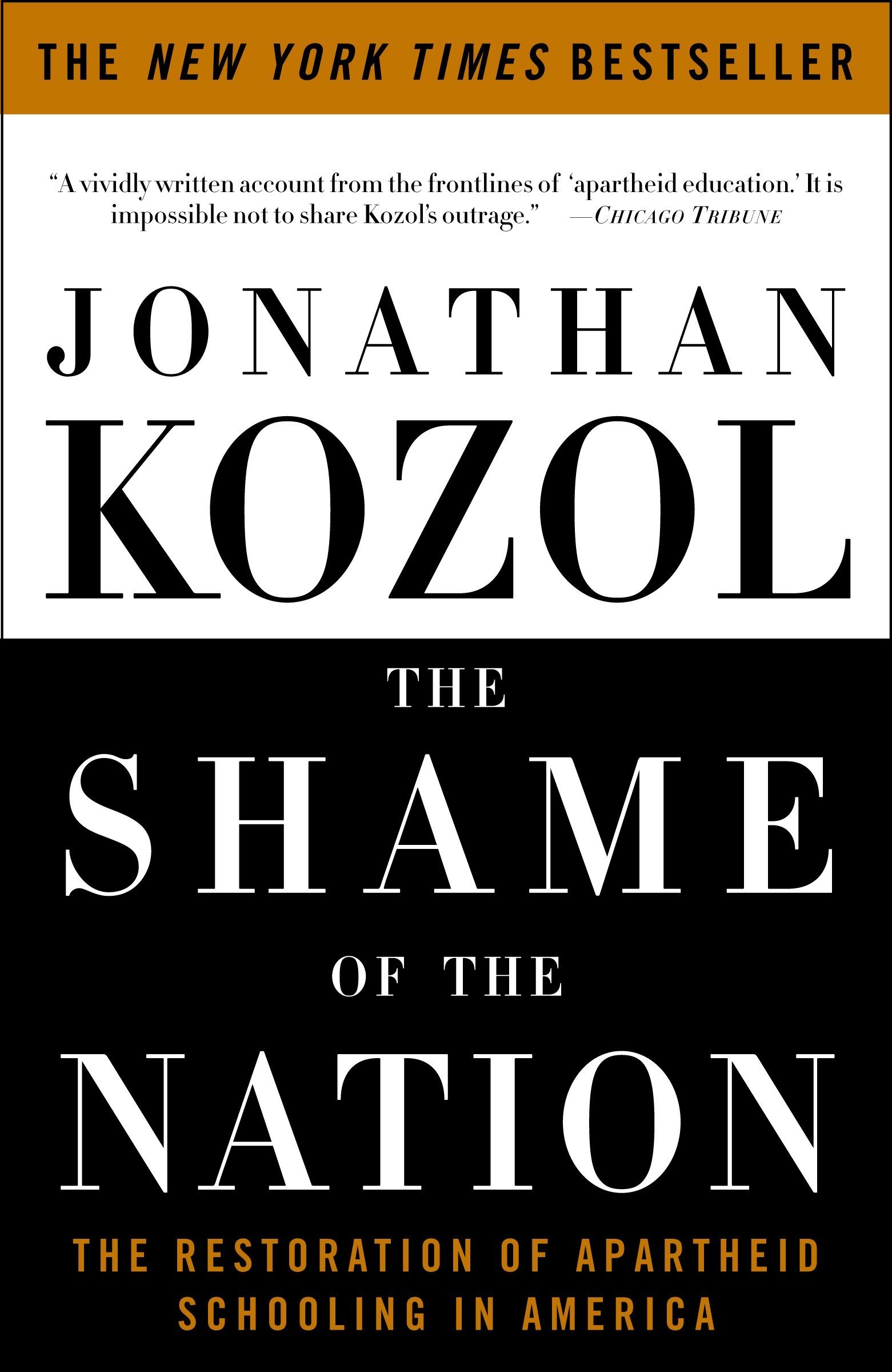
The Shame of The Nation by Jonathan Kozol is a non-fiction novel that reflects on the differences in the American education system for White students versus students of color. Kozol reflects on his time as a teacher at these "Apartheid schools".
Hello Readers!
The Shame of The Nation by Jonathan Kozol is a non-fiction novel that reflects on the differences in the American education system for White students versus students of color. Kozol reflects on his time as a teacher at these "Apartheid schools".
(The Shame of the Nation)
My group decided to read chapters one and two for our first assignment. This brought us to page 63, which leaves a lot of information to unpack and reflect on.
To start a reflection on Apartheid schools, we need to define what Apartheid schools are. Bloomberg.com defines these schools as, "increasing numbers of black children in the U.S. attend what researchers call “Apartheid schools” where students of color comprise more than 99 percent of the population." (Lieb)
Essentially, these schools are not legally segregated but are segregated due to economic status and race.
Kozol begins the book by explaining why he decided to become a teacher. There were a lot of political tensions that had to do with race, and he wanted to be an advocate for change. He then moves into a story about a student of his named Pineapple. He explains that even at a young age, Pineapple knew race and economic status were closely connected. Kozol tells a story of how she asked him what it was like "over there", in reference to primarily White neighborhoods. (15-16).
This was one of the first introductions to his arguments about kids of color being somewhat forced into lower levels of education.
It's important to note the economic cycle people of color are forced into. Economic status and income affect where you live. Where you live affects where your kids go to school. Where your kids go to school affects the type of education they will receive. The type of education they receive affects what job they will have. The job you have affects your economic status and income. It's a never-ending cycle that is one of Kozol's main arguments.
Kozol continues his argument in chapter two by telling another story. He prefaces this by explaining how he received a bundle of about 27 letters from a 3rd-grade class in the Bronx. One of these was from a girl named Elizabeth. Kozol explained how it was evident that Elizabeth was a good student; re-writing words several times, correcting her spelling, etc. However, there was a singular line that stood out. "'I wish that this school was the most beautiful school in the whole why world.'" (40)
Kozol tells how this particular line stood out to him as important, but never explicitly tells why. However, through the reading of this novel, it can be inferred that he included this as a part of his rhetoric. It leaves readers questioning, "why?". Why are schools so disproportionately affected for children of color? Why is education so low quality in these types of neighborhoods? Why does race play such a large role in the quality of education? Why isn't this cycle broken?
Overall, it's extremely clear that Kozol is arguing and advocating for change in the American education system. He leaves his readers with the overarching question of "why?". This forces the reader to think deeper on the subject of why this is happening, which is his main argument.
As for me, I am excited to read more. It's a fascinating topic that I knew existed, but I had never read far enough into it to understand. So far I am extremely happy with my book choice and I am sure that it will live up to the best-seller title.
Works Cited
Kozol, Jonathan. The Shame of the Nation: The Restoration of Apartheid Schooling in America. New York, Three Rivers Press, 2005.
Lieb, Emily. "How Segregated Schools Built Segregated Cities." Bloomberg Citylab, Bloomberg.com, 2 Feb. 2017, www.bloomberg.com/news/articles/2017-02-02/the-roots-of-america-s-apartheid-schools#:~:text=Board%20of%20Education%20decision%2C%20increasing,99%20percent%20of%20the%20population. Accessed 3 Mar. 2021.
The Shame of the Nation. 1 Aug. 2006. Amazon, www.amazon.com/Shame-Nation-Restoration-Apartheid-Schooling/dp/1400052459. Accessed 4 Mar. 2021.

Hello Paige!
ReplyDeleteI thoroughly enjoyed reading your first blog post. I noticed a lot of similarities from the book your group is reading, and ours. Similarly, our book Why are all the black kids sitting together in the cafeteria? also talks about apartheid schools without calling it just that. It simply states that schools have sever segregation with schools being either majority white, or black/latinx. What I was wondering is how do we as a society break down the limitations faced at schools? Since schools are generally based off of geographical location such as different neighborhoods or differnt parts of the city, and since neighborhoods are also segregated, how do we break down the barriers and being giving every child equal education?
I look foward to hearing your reply, and your next blog post.
Emily
Hi Emily!
DeleteYour comment opens up an interesting discussion about how to un segregate these schools when legally they are already segregated. To this we sadly do not have an answer. The only reasonable answer is to improve education in these areas by hiring consistent teachers, but there is no way to force this. The problem is also too wide spread for a simple fix.
I am interested in hearing more from you!
Paige
Hi Paige! Though I am not reading the same book as you, I may just have to pick it up after I finish mine! Your analysis of the rhetoric Kozol uses intrigues me. He seems to ask a lot of questions without answering them. Do you think he will go on to answer them as the book progresses? Or will he leave it up to the reader to contemplate? Your illustration of the harsh economic cycle people of color are forced into paints a sad picture of the struggle to break these chains of poverty. Kozol's use of his own experiences that he integrates into his writing provides an additional layer of expertise on the matter. Kozol is able to speak from first-hand experience about this topic of segregation in schools. However, how do you think Kozol's own experience would affect his view on the topic? Does he make his own views on the matter obvious? I look forward to keeping updated on your posts and hope you continue to enjoy your book!
ReplyDeleteEmma H.
Hello Emma!
DeleteI appreciate your kind words, thank you!
I think Kozol's use of rhetorical questions makes the reader think about 'why' this is happening. He is almost forcing the reader to think deeper about the topic, which is an important thing to do.
Kozol's stories and first hand experience add the ethos needed to approach this topic. He cited a lot of statistics, but the parts that stuck to me were the stories he told. These kids aren't just numbers, they are real people. This is their education we are talking about, and they deserve the best education they can get.
It saddens me to see the socio-economic cycle they are being forced into because of their race. The real question is, what can we as a society do to help it?
I look forward into discussing more!
Paige
Nice job structuring and including your own rhetorical choices/style in your post. What do you think makes his use of stories/anecdotes so effective and significant, as almost every member of your group has mentioned Pineapple?
ReplyDeleteHi Ms. LaClair! I appreciate your kind words! Thank you!
DeleteI think what makes Kozol's stories so effective is the emotion and rhetorical questions behind them. Kozol's main argument throughout the first chapters is "why?". This invokes emotion within the reader and connects them to the story more. Pineapple's story was particularly emotionally invoking because how shy she was to ask the questions.
Thanks again!
-Paige
Hi Paige! As you know we are reading the same book but I throughly enjoyed your analysis of the first few chapters that we had read. You took a different approach than me on the same topic and I thought you made some great points. I liked your use of the Elizabeth story explain the rhetorical style of Kozol. Speaking of that story do you think that the "why" was on purpose? I also really liked your introduction to the beginnings of talking about the economic causes of this situation with out getting too much into the weeds just yet. I look forward to continuing to read your blogs.
ReplyDelete-Max A
Hello Max!
DeleteThank you for your kind words!
Part of me does think Elizabeth's misspelling was intentional, and that is why I decided to title my post after her quote. However, we do need to realize it was most likely a misspelling, as she was only in 3rd grade and didn't realize why it was such a thought-provoking coincidence.
Thanks again!
Paige